Dull but important – why corporate governance matters

We’re starting to see a new approach to how our major corporations are governed and held to account. However few are getting excited about it.

Talk about corporate governance and most people’s eyes glaze over. When the Financial Reporting Council earlier this year announced a fundamental review of the UK Corporate Governance Code – 25 years on from the original Cadbury Report – not everyone cancelled their holidays to await developments.

That proved wise, as true to form, this will be a slow-burn. However some elements are starting to come together. Last week the government announced its approach to some hot topics that featured in political debate around the new prime minister and the general election.

The outcome is less than the hype, also true to form. Mandatory worker representatives on Continue reading

Responsible business and the dogs that didn’t bark

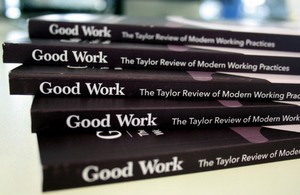
With the UK election over and the government up and running, what are the prospects for responsible business now, and how will the recently released Taylor Review of employment status change expectations.

On the face of it, normal politics in the UK has now resumed: the minority government has reached an agreement with the Northern Ireland’s 10 DUP MPs and the Queen has made her annual journey to Parliament to announce the legislative programme, albeit shorn of the usually flummery of crowns and gowns (tacit recognition of the existential nightmare underway in Brussels with the start of Brexit negotiations).

As if to underline the attempt at normality, the long awaited Taylor Review of Modern Employment Practices was published on July 11 , and – I think significantly – Theresa May used the opportunity for a big speech, trailed in the media as a relaunch of her premiership. That same day my colleagues and I at Corporate Citizenship convened our clients and partners to review the post-election prospects for those engaged in the journey towards responsible and sustainable business. I got to kick off the debate with an extended version of my previous two-part analysis (here).

Continue reading

Steady as she goes

With the UK general election over, what did it tell us about the continued relevance of corporate responsibility and sustainability? Four things at least, despite the lack of debate.

Prediction is a mug’s game.  In guessing numbers of seats in the House of Commons, mine were as flawed as most.  Now attention switches to the drama of the outcome and the interplay of personalities – a damaged prime minister, speculation about leadership bids, peace apparently breaking out in the civil war that was the Parliamentary Labour party.

As I write, a new government is being formed, looking remarkably like the outgoing one, save for its Orange underpinnings (an association that will surely undermine the 15 year project – author one T. May – to detoxify the nasty party).

Looking ahead to possible policy changes, what is likely to happen now?  Are the manifestos any guide at all?  Actually the pre-election analysis of the major parties’ offerings that I prepared for Corporate Citizenship is still relevant, I think, though that might not be obvious since so little was debated or contested during the campaign.

Ostensibly all about Brexit and strengthening the negotiating hand, in fact the election Continue reading

The change election – time for business to decide

With the election battle gathering pace in the UK, big business is keeping its head down, despite having much at stake. Mike Tuffrey reads the early runes as the contest unfolds.

The pundits will tell you that political parties adopt one of two positions in elections – either “it’s time for a change” or “things are getting better, don’t let the other lot ruin it”. This time, however, that isn’t the choice on offer; everybody seems to be promoting a change agenda of some sort.

As I write this, the parties are busy publishing their manifestos. I’ll do an analysis once they are all out. Still, enough has been leaked or deliberately trailed to hazard a prediction: this is not a change or status quo battle, or a conventional left/right choice where one side says we need more government and one argues for less.

Continue reading

Time for new thinking on corporate purpose

Mission ledAn opportunity to kick-start a move towards more mission-led companies is getting caught up in Brexit fall-out.

A little reported but potentially momentous bit of thinking is going on in the depths of the UK government. Earlier this summer the Cabinet Office started a consultation on ways to strengthen so-called ‘mission-led’ businesses. One question arising is whether we need a new form of corporate structure to encourage them.

The consultation set the scene like this: The traditional roles of civil society and business are changing for the better. The social sector is becoming more business-like and businesses are keen to demonstrate their social impact. Continue reading

Business action on the SDGs: Why business still needs to make the big next step

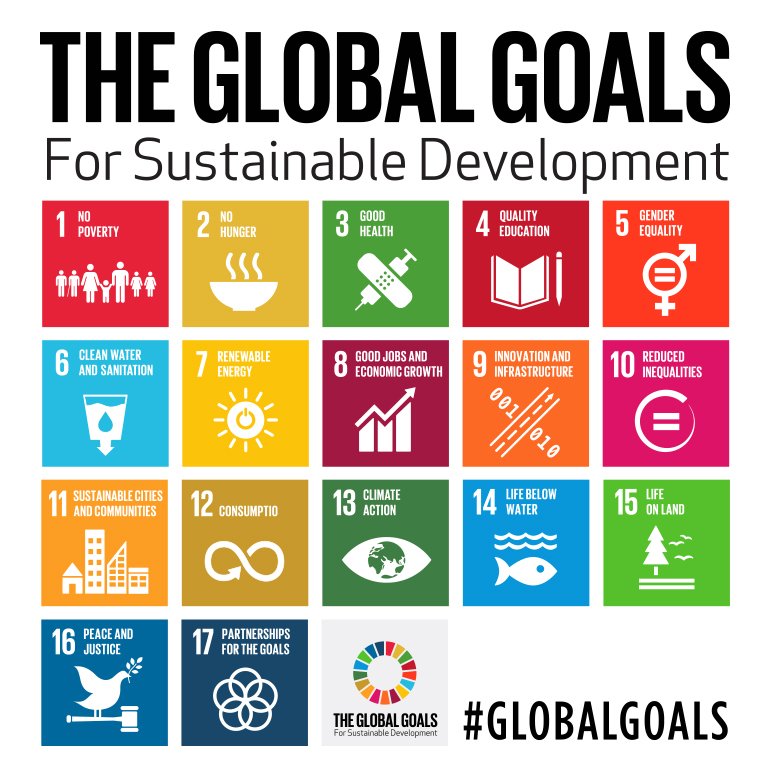
globalgoalsToo many companies are trapped by the ‘curse of materiality’ and aren’t accepting the challenge of change.

When the Global Goals were agreed last September, I hailed them as setting “the new, de-facto global standard for businesses to design, measure and account for their contribution to sustainable development”.

I said they present a unique opportunity for businesses to align their programmes and purpose to the needs of society – and in so doing, grow the business, reach new customers and markets, develop new products and boost the bottom line. Since the SDGs set out the issues the world has agreed are THE global priorities, business can’t succeed in the long run unless these aims are met.

That’s why I described them as providing the gateway for any business to shift from Continue reading

COP 21: The road to hell?

The climate agreement in Paris is being hailed as a triumph. But is it really, and what does it mean for business?

Getting the governments of nearly 200 countries to agree to any one thing is no mean feat. And the climate talks weren’t just ‘anything’. That’s why expectations were low in the run up to COP 21 in Paris.

In the event, the final agreement is at the upper end of expectations. More than 180 countries have committed to cut emissions significantly. They’ve agreed to a five year review or ratchet mechanism for further commitments in future. Their long term goal is for global warming to stay “well below” the threshold of two degrees Celsius above pre-industrial times, so as to prevent run-away climate change. Surprisingly, a 1.5 degree aspiration (“endeavour to limit”) is also included. Continue reading

Healthcare – counting the cost

Companies like GSK and GE are focusing on health outcomes as a key measure of business success. Other companies would be well advised to learn lessons from their approach.

Andy Wright from GSK reminds us in Briefing’s ‘speaking out’ commentary this month that the Ebola outbreak is symptomatic of a huge healthcare deficit globally. GSK’s new approach to doing business – with pricing caps and profit reinvestment in the 49 poorest nations – marks a radical departure to business-as-usual. It deserves careful scrutiny by other companies, well beyond the healthcare sector.

Another big-name business that has embraced a new measure of success is GE. Its Healthymagination programme is investing $6 billion in bringing to market product innovations that deliver high-quality and more affordable healthcare. Anybody can do high quality at a price; the big prize here is lowering the costs of healthcare. Already GE has 100 validated products on sale.

Why does this matter? Good health costs money. Not surprisingly rich countries spend more: according to World Bank data, nearly $9,000 is spent on public and private health per capita in the USA, but less than $90 in India and many African countries. Even measured on ability to pay (as % of GDP), the disparity is marked – 18% in the USA, 9% in the UK, and 4% in India.

Whatever the wealth level or population size, lower costs simply mean that more people can get help. Think of the rising cost of the (tax-payer funded) NHS in relatively affluent UK. Any business that sets its goal as reducing healthcare costs is making a social contribution to one of the world’s biggest challenges. Couple that with a business strategy that grows market share and increases sales, and you have a classic win-win solution, for investors and for society.

In fact the win-win can go further towards sustainability, as there’s often a green dimension too. The price of much environmental damage shows up in healthcare costs. Think of the poor air quality in our big cities. The OECD puts the economic cost of outdoor air pollution in member countries at $1.7 trillion, from higher healthcare costs and increased mortality – about half of that is from road transportation alone. A company increasing the efficiency of its vehicle fleet doesn’t just achieve a CO2 benefit (and probably reduced long term running costs), it saves lives and cuts healthcare costs too.

The lesson for sustainability professionals trying to construct KPIs to measure their triple bottom line impacts – and perhaps tempted into the complexity of an E P&L (environmental profit and loss account) – is this:  look at using health as a proxy indicator, counting both costs and crucially benefits too.

This article was first published in Corporate Citizenship Briefing

The Green Book – new directions for Liberals in government

Yesterday saw the launch of a book project that I’ve beengreen-book working on with colleagues over the last year. Between us, we persuaded 27 authors to put pen to paper and say what should be in a programme for government, one that’s fit for the world we live in today. Some 70 people from business, NGOs, academia, think-tanks and political parties joined us in Westminster for the launch.

Our choice of the title “Green Book” is a very conscious nod towards the Orange Book of a decade ago and indeed Lloyd George’s Yellow Book – really authored by John Maynard Keynes – 85 years ago. Last week I wrote how times have changed since then.

Each author has a specific point of view but all were united in saying we can’t go on as we are, both as a country and as a party. As editors, we were clear that the LibDems are now a party of national government; we need a programme to put before the voters that’s frank about the challenges Britain faces: the first industrialised nation that has largely exhausted its natural resources and now has to compete for energy, food and raw materials with the burgeoning economies of India, Brazil and China.

As a party of government, now and after the next election, we have to change the narrative too if we are to succeed. More and more austerity, explained as paying off Labour’s debts, is neither an economic strategy nor a persuasive political proposition. At stake is not just a ‘lost decade’, bad though that is, but any chance of a prosperous economy and fair society into the foreseeable future. Oil at $100 a barrel and commodity prices more than doubling over the last decade represent fundamental changes we’re not yet facing up to.

This means we need to be the party of long term investment – in houses that are so well insulated they stay warm in winter and cool in summer, in transport that doesn’t rely on burning expensive fossil fuels, in ‘knowledge’ jobs that can’t be off-shored, in a ‘local economy’ with shorter food miles and greater resilience to global shocks, and above all in an energy infrastructure that doesn’t rely on the Russians for gas to keep the lights on.

We need to be the party of responsible big business, and challenge them through fiscal and regulatory incentives to be partners in investing for a sustainable economy – everything from fair wages and training new staff to spending their growing cash piles on R&D for hyper-efficient new products and services that literally don’t cost the earth.

We need to be the party that gives hope to ordinary citizens that the future can be better than the current reality – a future they help create, one where we grow in our well-being as humans, rather than accumulate yet more ‘stuff’ as consumers.

We call this programme ‘green liberalism’. In the book we’ve grouped our authors’ ideas under five themes:

  • modernising the economy and building long term resilience
  • rebuilding infrastructure and regenerating communities
  • putting citizens and consumers at the heart of green liberalism
  • combating market failure and taxing pollution
  • reforming national government and making best use of international alliances

Read more about it here www.green-book.org.uk and come to our fringe meeting with Nick Clegg and Ed Davey at Brighton on Saturday lunchtime, 9th March.

The Green Book: New Directions for Liberals in Government, edited by Duncan Brack, Paul Burall, Neil Stockley and Mike Tuffrey, published by Biteback price £12.99, was launched at the House of Commons on Monday 4th March.

This article first appeared in LibDemVoice

Nothing to fear but fear itself

Mike Tuffrey seeks inspiration from Roosevelt in advocating a four point plan for a sustainable economic recovery.

With all the depressing news about the economy, I can recommend a re-reading of the inaugural address of newly-elected President Franklin D Roosevelt, given in the depths of the Depression on March 4, 1933. Aside from his well-known call to arms against fear itself, he did a nice (and topical) line in banker-bashing too: “Practices of the unscrupulous money changers stand indicted in the court of public opinion, rejected by the hearts and minds of men”.

Elements of his prescription are highly relevant for us today – us as a country and us as a party. Last month I argued we need a new distinct alternative economic strategy, for jobs and business growth, not just fiscal responsibility.

Since then, the noises from our team in Westminster have been encouraging, though we are a long way from positioning the party with our own ‘sustainable growth’ approach as part of rebuilding the LibDem ‘brand’. This is vitally important at the half-way mark of this Parliament. The focus on getting the low paid out of tax and opposing NHS privatisation is good but not enough.

To advance thinking, I’ve developed a ‘four plus two’ plan as a contribution to a debate (run by London Remade) about what a sustainable economy looks like regionally. It hardly needs saying that the situation is urgent and growing: almost 400,000 Londoners – one in ten, the second highest in the whole country – are unemployed and seeking work.

First are four main pillars for immediate results:

  • Housebuilding – a big programme on land that is in public ownership
  • Skills for young people – including a role for responsible large firms
  • Local jobs and business – especially in the new environmentally-sound industries
  • Fair wages – since trickle-down economics can’t be relied on

To these four, I have added two longer term goals – zero carbon and zero waste. Taken together, this would get Londoners to work, improve their housing, health and environment, encourage local business, and give our economy and society much greater resilience.

You can read more about the plan ‘Nothing to fear but fear itself’ here and more about the London Remade debate here.

This article first appeared in LibDemVoice