Time for new thinking on corporate purpose

Mission ledAn opportunity to kick-start a move towards more mission-led companies is getting caught up in Brexit fall-out.

A little reported but potentially momentous bit of thinking is going on in the depths of the UK government. Earlier this summer the Cabinet Office started a consultation on ways to strengthen so-called ‘mission-led’ businesses. One question arising is whether we need a new form of corporate structure to encourage them.

The consultation set the scene like this: The traditional roles of civil society and business are changing for the better. The social sector is becoming more business-like and businesses are keen to demonstrate their social impact. Continue reading

Business action on the SDGs: Why business still needs to make the big next step

globalgoalsToo many companies are trapped by the ‘curse of materiality’ and aren’t accepting the challenge of change.

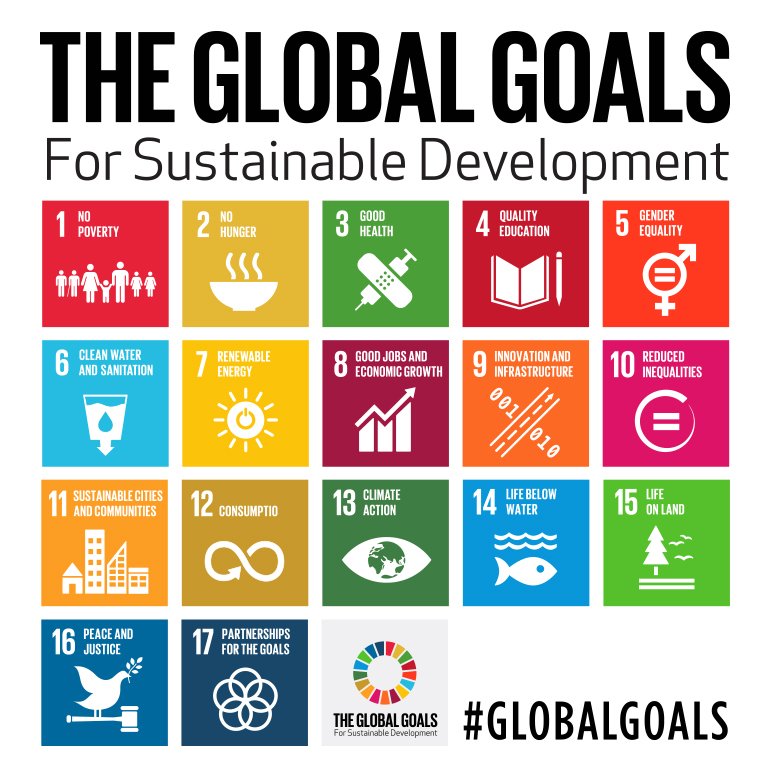
When the Global Goals were agreed last September, I hailed them as setting “the new, de-facto global standard for businesses to design, measure and account for their contribution to sustainable development”.

I said they present a unique opportunity for businesses to align their programmes and purpose to the needs of society – and in so doing, grow the business, reach new customers and markets, develop new products and boost the bottom line. Since the SDGs set out the issues the world has agreed are THE global priorities, business can’t succeed in the long run unless these aims are met.

That’s why I described them as providing the gateway for any business to shift from Continue reading

Big shift towards a new consensus

As the fallout from Brexit continues, there’s growing agreement about the causes but a lack of clarity about what comes next.

US President Theodore Roosevelt

A clear consensus is emerging around the underlying cause of the Brexit vote. It was less about the specifics of the EU or unique to the UK and more a reaction to wider trends, notably economic – open border globalisation, economic slowdown, growing inequality and mounting mistrust of most institutions including big business and now ‘experts’ too. My initial comment last month holds largely true.

John Lanchester, author of How to Speak Money, puts it well when he says “whole swathes of the UK have spent the last decades feeling that things are being taken away from them: their jobs, their sense that they are heard, their understanding of how the world worksand their place in it”. His full analysis Continue reading

Brexit – don’t panic, start reforming

Britain’s referendum result has its roots in long-standing economic unfairness, and it will get worse unless business learns some lessonseurope-1456245_1280

The shockwaves from the UK’s vote to leave the European Union continue to reverberate around the world. Economists speculate on the implications. Politicians with elections looming in Europe and America worry what it means for them. Individual citizens in Britain – well, about half of them – ask profound questions about their country and the divisions so starkly revealed.

The sense of shock and the search for meaning is palpable. I will resist adding lots to the Continue reading

The power of purpose

Controversial taxi company, Uber, has just launched a new statement of mission to reposition the business.  They follow in the footsteps of others, but beware of the dangers.

uberTechnology is disrupting many businesses.  Enabled by smartphone apps, radical change is coming – and just one example is playing out on the streets of London, where 100,000 private hire vehicles now compete daily with the traditional black cab trade.  Behind it is Uber and its army of self-employed drivers, all part of the new sharing economy. Famously forthright, the London cabbies are still only arguing about this change in their livelihoods, unlike Paris where militant drivers took to the streets.

Uber started out in 2009 as UberCab in San Francisco, and has grown exponentially ever since.  It recently relaunched its corporate branding. Out went the classic U logo and in came flexible treatment in its different markets, built around a new statement of corporate purpose: not a taxi app any more, but all about “creating industries that serve people – Continue reading

Sugar tax: the cost of failing to listen

The Financial Times reports that shares in AG Barr, maker of Irn Bru, closed down 2.4% following the UK government’s announcement osoda-686984_1280f a tax on sugar in soft drinks, while Britvic, producer of Robinsons squash, fell 1.3%.  Loss of shareholder value in those two companies alone – some £40m.

Compare that to the small amount typically invested in corporate responsibility programmes and the business case for listening to stakeholders and acting correctly becomes overwhelming.  Continue reading

Managers get it. Do investors?

When owners speak, company bosses tend to listen. So why hasn’t the ethical investment movement had more impact? And now that professional investment managers NASDAQincreasingly understand the issues, will more investors follow?

Back in January the UK-based Investment Association published data showing ethical investment at an all-time high, with funds under management totalling £10.7 billion, having more than doubled in a decade. Time to crack open the champagne? Do investors finally understand that good business practices can enhance long term returns? Will corporate behaviour now improve?

Alas, no. The same data shows that so-called ethical funds are stubbornly stuck at 1.2% of the whole market, a figure that hasn’t moved in 10 years. Continue reading

Corporate titans and the fourth industrial revolution

The fourth industrial revolution will see good jobs shredded like never before. Business needs to rethink the economic environment if it is to be sustainable.

Corporate titans from around the world gathered last week for their annual love-in at Davos. Joining them to provide a scattering of stardust was actor Leonardo DiCaprio.

Fresh off the set of his Oscar-nominated film, The Revenant, DiCaprio was praised for the award-winning work of his eponymous foundation in protecting vulnerable wildlife from extinction. Continue reading

Dieselgate: what governments did, didn’t and should now do

Even the most cynical of corporate critics are being surprised at the revelations from Volkswagen. What does it also tell us about the role of governments?

The Volkswagen crisis has been escalating since September, when the company admitted that it had installed so-called ‘defeat device’ software in 11 million diesel vehicles so they appear to meet air-quality standards for nitrogen oxide, a gas which poses a threat to human health. The latest twist came this week when it admitted to understating CO2 emissions for about 800,000 vehicles sold in Europe and overstating their fuel economy.

What started in one market (the USA) just with diesel engines has multiplied: more markets, more fuel types, and more brands, with Audi and Porsche now implicated. So far no other manufacturing groups have been found at fault. However the regulators are circling, while the weakness of their testing is under scrutiny too.

VW’s share price has dropped 40% since September, destroying some €35 billion of shareholder value. Direct costs continue to mount – now estimated at €8.5 billion in fines, compensation and rectification, with unquantifiable long term damage to the brand. In academic circles, proof of the so-called ‘business case’ for corporate social responsibility is much debated; what is surely no longer in doubt is the cost of irresponsible actions.

Aside from annoyed regulators and outraged drivers, others are not letting a good crisis go to waste. For example, Greenpeace is cannily using the affair to drive take-up of electric vehicles – with a specific demand to VW to develop a “mass-market electric car that families can afford”. That’s both smart campaign tactics and astute advice to VW who certainly will need a game-changing story beyond “we’re sorry” if they are to recover their reputation.

And what of governments themselves?

What they did right was pursuing testing and issuing violation notices, at least in America, where the EPA (the US agency to protect human health and the environment) has led the way. It was this action that uncovered the wrongdoing: not VW’s ethics rules or a whistleblower, nor its own sustainability reporting and assurance, nor external scrutiny from the legion of rating and ranking agencies like DJSI.

What governments did not do, at least in Europe, was act swiftly on the available evidence. We’ve known for a decade that the real-life impact of diesel was below theoretical improvements in emissions. In my previous work as a London Assembly member, I was critical of the European Commission which was slow to enforce its environmental directives. I was questioning the London transport authorities as long ago as 2006 on action needed to improve air quality, where diesel was the principal villain. (So external rating and ranking agencies should have known of the problem, if they had gone looking.)

What should governments do now? One thing is to be a lot more inquisitive when their citizens’ health is at risk. Another is to be a lot less trusting about corporate culture that lets bad behaviour go unchallenged, even if one accepts (which I don’t) that it’s all down to a handful of rogue engineers.

Like Watergate before it, Dieselgate can teach us much beyond the specific cause célèbre about underlying corporate systems and a damaging lack of accountability.

Double-whammy: young women and the potential for progress

With attention focused on the launch of the Global Goals in New York, let’s put the spotlight on gender inequality and how companies can profit from parity.

Among the 17 new sustainable development goals, it’s no coincidence that women are the only demographic group to have a single goal dedicated to them. Goal #5 pledges gender equality, and calls out the role of young women in particular.  That’s because empowerment here will unlock progress on many of the other goals.

Despite some recent improvement on legal rights, the economic disparities between men and women remain stark. To cite just one piece of evidence – from the Food and Agriculture Organization of the United Nations – if women had the same access to productive resources as men (and they comprise 43% of labour force on developing country farms) food yields would rise by 20–30 percent. That’s a lot more mouths fed and families lifted out of poverty.

It’s no surprise then that some companies have made empowering women one of the main pillars of their approach – such as Coca-Cola, under the tagline #5by20. Coke says the role of women is one of the three issues “that will more shape or define the 21st century” than any others. It has committed to enable “the economic empowerment of 5 million women entrepreneurs across the Company’s global value chain by the year 2020”.

Walmart – the world’s largest company by revenue and biggest private employer – has gone further and committed to source $20 billion of products from women-owned businesses in America. Go online in the US and you can select your shopping basket from women-owned suppliers.

Unilever has long recognised that young women – schoolgirls in particular – are a key agent for delivering its health and hygiene programmes such as Lifebuoy handwashing and for meeting its one billion goal. And last year it added a new pillar focused on women’s livelihoods to its legendary Sustainable Living Plan.

Just last month the McKinsey Global Institute took a look at the subject – and put a price tag on the opportunities being missed. Its report, The Power of Parity,  estimates that advancing women’s equality could add $12 trillion to global growth. Actually, that number isn’t even at the top end of its number-crunching estimates. India and Latin America stand most to gain.

And here at Corporate Citizenship, we’ve just published our own advice on what the global goals mean for business, From My World to Our World, the culmination of a 17 week odyssey of analysis in the run-up to the New York launch. If companies want a double-whammy of benefit, focusing on goal number 5 is a great place to start.

This article also appeared at Responsible Business blog